
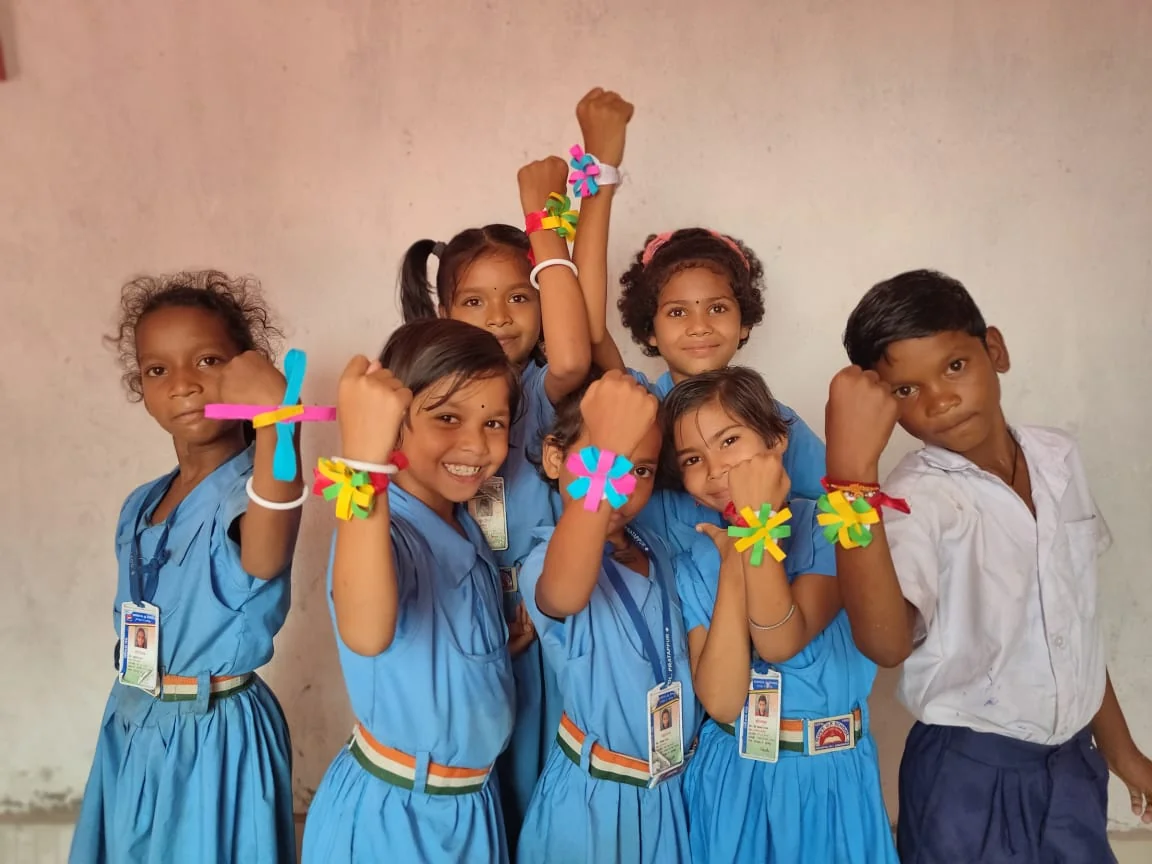
Today’s session felt like a soft pause in the middle of our busy school week, a space where children turned inward and met themselves with kindness.
We began with a short mindfulness activity. The students closed their eyes, sat quietly, and reflected on the good things about themselves, the qualities that make them who they are, and the part of their body they love the most. When they began to share, their words carried innocence and depth. Some said they liked their eyes because they help them see others, while a few mentioned their nose because it helps them breathe and stay alive. Such simple answers yet so true, so full of awareness.
Building on this quiet reflection, we moved to the mirror activity and this was where the magic unfolded. Each child held up a small mirror and looked closely at their reflection — their eyes, lips, hair, and smile. There was laughter, some curiosity, and a quiet sense of wonder. It was as if they were seeing themselves for the first time not through judgment, but through acceptance.
To make the experience more real for them, I joined in too. I told them how I like my short height and my dark complexion, how these are a part of who I am. When I shared this, students looked at each other, a few smiled back. It felt like my small act of honesty gave them permission to be open too — to say what they liked about themselves without hesitation or shame.
From self-observation, we moved to self-understanding through a story — The Chameleon and the Butterfly. It was about a chameleon who kept changing its colors, trying to look like everyone else, yet never feeling happy. Only when it met a butterfly did it hear the words, “You are most beautiful when you show your true colors.” The chameleon stopped changing then it stayed green, its favorite color and finally felt content.
As the story unfolded, I saw the children’s faces light up with understanding. One child said softly, “So, we don’t have to be like others.” That one line stayed with me. It captured everything the session was about the courage to be oneself, to wear the lens of acceptance.
To bring their reflections to life, the students created small zines(little booklets) to express who they are. On the first page, they wrote their names beautifully. On the second, they described their favorite thing about their body. And on the third, they drew their favorite animals: fishes, parrots, elephants, cats, each unique, each vibrant showcasing that everyone is different from each other and thus, we should accept ourselves. Their little books were full of color and character, just like them.
This initial stage of self-acceptance is where social awareness begins. When children learn to value who they are, they also begin to value others for who they are. This understanding will help them see the beauty in differences in themselves, and in everyone around them.