
Introduction
What does childhood look like in Sonepur, a culturally rich yet migration-impacted district of Odisha? Beneath its vibrant traditions, lush fields, and temple bells lies a quieter story, one of disrupted education, broken friendships, and early responsibilities.
Childhood is usually imagined as a time of curiosity and carefree play. But in Subarnapur (Sonepur), it is often shaped by journeys, not for exploration, but for survival. Here, migration is less a choice and more a necessity. Families move seasonally to states like Andhra Pradesh, Karnataka, Tamil Nadu, and Telangana in search of work in brick kilns, chilli fields, or construction sites.
Children rarely stay behind. With no caregivers at home, they accompany their families unseen, unheard, and unsupported. Migration takes a toll beyond economics; it rewrites childhood itself. Sonepur becomes not just a town by the river, but a point of departure where young lives begin learning hard lessons in movement, uncertainty, and sacrifice.
Child’s Life: Between Clay, Aspirations, and Dust
In the non-migration months, childhood breathes differently.
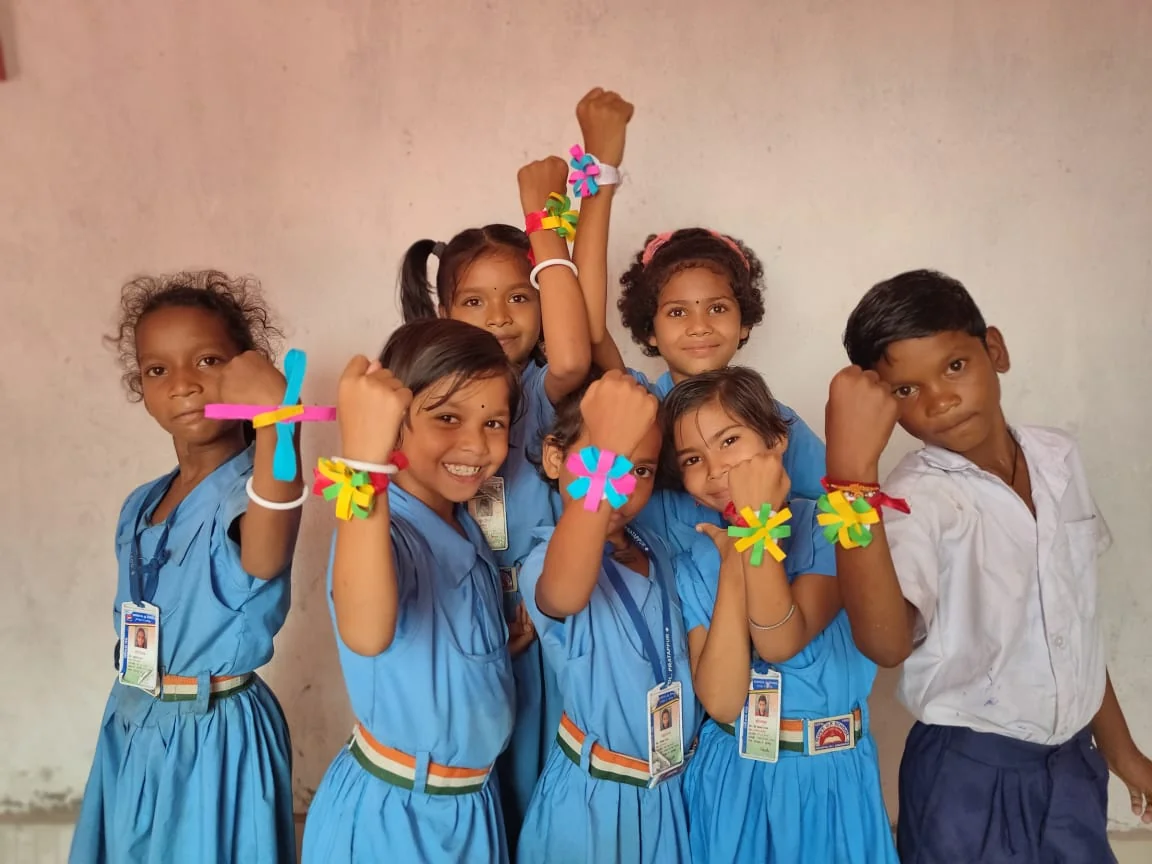
A child’s day begins early well before school. Across many households in Sonepur, children wake to the soft clinking of pital (brass), the dull shine of silver, and the rustle of palm-leaf mats. They join their parents in crafting traditional items like tambi (containers), chalni (sieves), chattu, badhni (brooms), and chatai (mats made of khijur palm). These tasks are not just morning chores; they are lessons in heritage—passed hand to hand with patience, skill, and quiet pride.
When families remain in the village, these cultural practices flourish. Festivals become more than rituals—they are moments of bonding and creativity. Children help shape clay idols of Maa Lakshmi or Savitri, their muddy fingers sculpting stories handed down through generations. In these moments, they feel not just useful but deeply connected—to their roots, to their people, and to a shared sense of identity.
As the work winds down, another rhythm begins—the rhythm of play.
Narrow gullies fill with laughter as children chase each other in games like kabaddi, bis-amrut, gutku, and ek-trip. Under the shade of trees, they draw Ludo-patti grids in the dust, using stones and sticks as game pieces. Girls skip rope. Boys hop through drawn patterns. In the freedom of these games, children break through the boundaries that adults often uphold—caste, gender, and class momentarily blur.
And amidst all this, dreams quietly take shape. Ask a child what they want to become, and their eyes gleam—“Doctor! Police! Didi (Ma’am)!” Their words are few, but their aspirations stretch wide, shaped by dignity, care, and the role models they admire.
Yet, not all childhoods follow this gentle rhythm.
Childhood in Transit: Impact on Children
When migration season begins, the patterns of childhood shifts. The mornings once filled with clay, schoolbags, and games are now replaced by long journeys, unfamiliar cities, and adult responsibilities.
In Sonepur, migration is often facilitated by local brokers who promise free accommodation, meals, and access to education for children at the destination. These assurances attract vulnerable families struggling with poverty, landlessness, and crop failure. Trusting these verbal agreements, they migrate, carrying their hopes and their children with them.
On average, 50–60% of families in this region migrate for work. In some tribal and remote areas, the number is even higher. For instance, in the village of Salepali, an estimated 90–95% of families migrate seasonally. This reflects the acute lack of local employment, essential services, and the everyday hardships faced by marginalized communities.
- Education Interrupted
Migration from Sonepur usually occurs in January and February, just before school exams in March, disrupting children’s education at a crucial time. With no caregivers at home, young children often accompany their families, and elder siblings, especially girls, care for them at work sites.
Some children enroll in local schools at migration sites but face language barriers and unfamiliar environments, while many do not attend school at all, taking on household or labor duties instead. Upon returning after 3–4 months, children struggle to catch up, having missed key lessons and forgotten basics. This academic gap often leads to shame, disinterest, and dropout.
- Living Conditions and Isolation
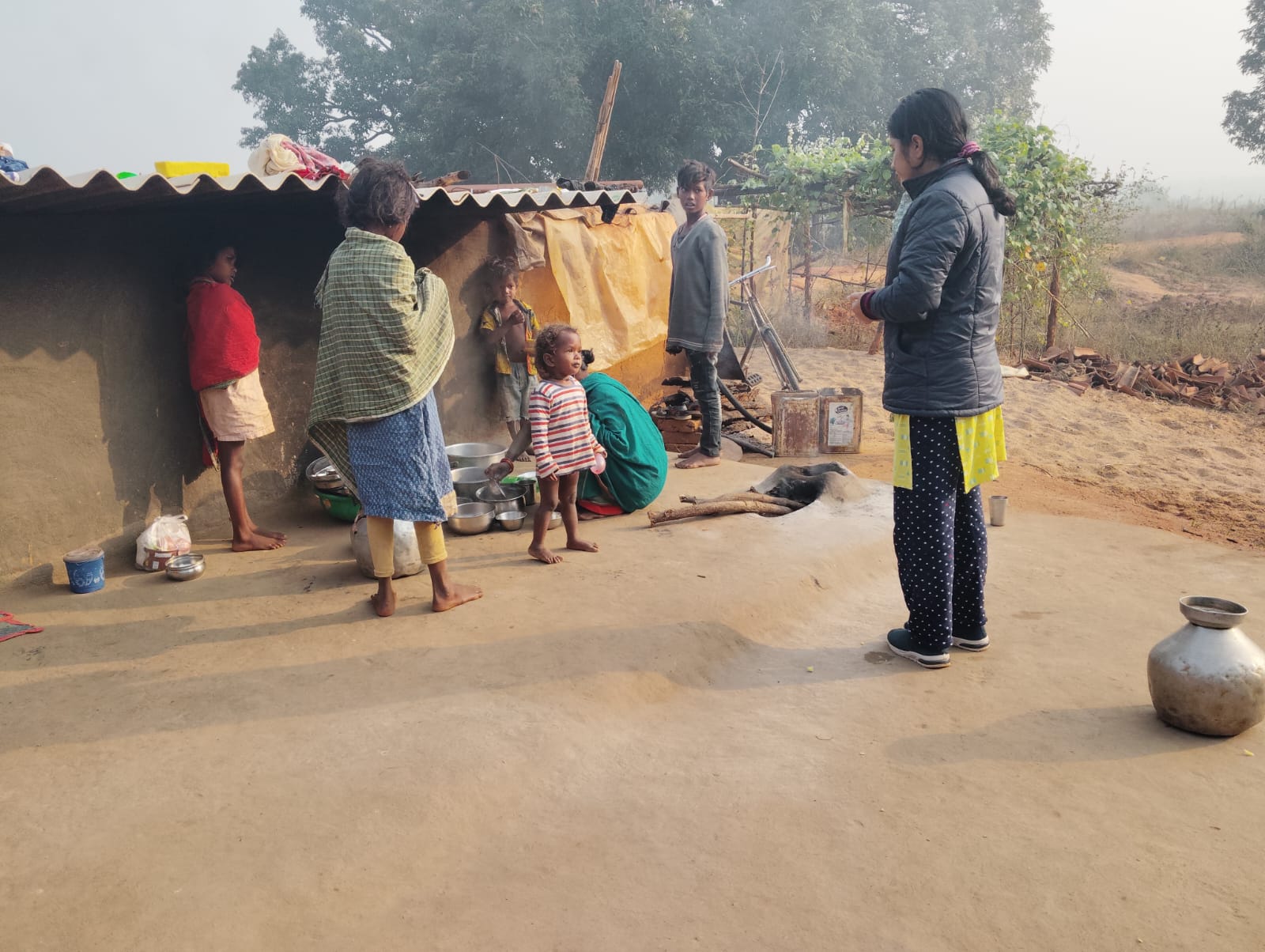
Migrated families often live in isolated areas with limited access to markets and services. Food is scarce, mostly rice and dal with little protein or vegetables, and many survive on one meal a day.
To ease hunger and exhaustion from hard labor, adults frequently consume locally brewed alcohol (desi daru), which children often imitate. With little supervision or support, many young children and adolescents begin using substances like liquor, ganja, safal, and jarda.
What starts as imitation often leads to addiction, severely harming their health, development, and future, one of the most troubling effects of these harsh living conditions.
- Challenges During Adolescence
Adolescent girls face unique challenges during migration, especially as they begin menstruation. Many lack access to basic menstrual hygiene products, clean water, and private spaces, which affects their physical health and comfort. Even when enrolled in school, the absence of clean, functioning toilets often forces girls to miss classes or drop out entirely.
Additionally, many girls are vulnerable to verbal harassment, inappropriate touching, and molestation, causing lasting mental and emotional trauma.
- Health and Nutrition
Whether in their village or at the migration site, nutrition is a constant concern. At home, meals are simple and repetitive. Over time, malnutrition weakens children physically and cognitively. Poor sanitation and irregular health checkups add to the risk of disease. And most importantly lack of clinic centers and hospitals and accessibility to good hospitals becomes an add on challenges for them.
- Well-being and Dignity: A Bruised Identity
Back in school, migrant children often face teasing and exclusion. Peers mock them calling them names like brick-maker, chilli plucker, or construction kid. These words hurt more than we realize. They carry the sting of judgment and rejection. Slowly, children begin to withdraw, their self-esteem eroding. The humiliation is too much to bear, and they drop out of school not because they lack ability, but because they no longer feel they belong.
Yet, it would be unfair to paint only a grey picture.
Through migration, children gain something unique life skills that no textbook teaches. They learn how to adapt to new environments, solve problems creatively, shoulder responsibilities early, and survive under pressure. Many return speaking Telugu, Hindi, or other languages building bridges across cultures at a tender age. These children, though often behind in academics, are rich in emotional intelligence and resilience.
Evenings in the village, when they return, are full of life. They bring stories from faraway cities, some confusing, some exciting. But they also return to the same fields, the same games, and the same circles of laughter. Barefoot, they run with friends, share puffed rice, and laugh like they never left.
Childhood here isn’t perfect. It is layered with the colours of craft, the shadows of migration, the rhythm of local games, and the sparkle of quiet ambition. It is fragile, yes but it is fiercely alive, carried forward by children who hold dreams in one hand and dust in the other.
What Holds Them Back
In most families, children’s futures are dictated by survival. Parents prioritize livelihood over education not out of ignorance, but out of necessity. As one parent put it, “If we don’t earn, how will we feed and send our children to school?”This simple truth speaks volumes about the choices families are forced to make. For many children in Sonepur, childhood means obedience, not choice. They follow their parents not just physically, but in dreams and destiny.
Reimagining Childhood in Sonepur
The story of childhood in Sonepur is not just about migration, it is about resilience. These children are not passive victims but young individuals navigating hardship with quiet strength. Still, no child should have to choose between survival and schooling, between duty and dreams.
Migration may be an economic reality, but it should not come at the cost of childhood. With focused efforts, bridge courses, emotional support, inclusive education, and community awareness we can ensure that every child, whether they stay or migrate, has the chance to learn, grow, and thrive.
It’s time we listen to their silent struggles and act with empathy. Because every child, in Sonepur or beyond, deserves not just a future but a childhood worth remembering.